
Abstract
The best custom sandals supplier is not simply the one with the lowest quote. For brands, retailers, wholesalers, and ecommerce sellers, the better choice is a factory that can support practical customization, efficient sampling, stable quality, and dependable bulk delivery. This article explains who should work with a custom sandals manufacturer, what buyers usually mean by related sourcing terms, which five checkpoints matter most before cooperation starts, how to judge long-term factory fit, and what questions to ask before placing a first order. It also naturally reflects the service strengths presented by Sansheng Shoes, including OEM and ODM support, low-MOQ flexibility, in-house design updates, factory-level inspection, and scalable production.
Quick Answer
Choose a custom sandals manufacturer that matches your business model, supports clear customization, offers workable MOQ and sample timing, and can keep quality and delivery stable as your order volume grows.
Key Takeaways
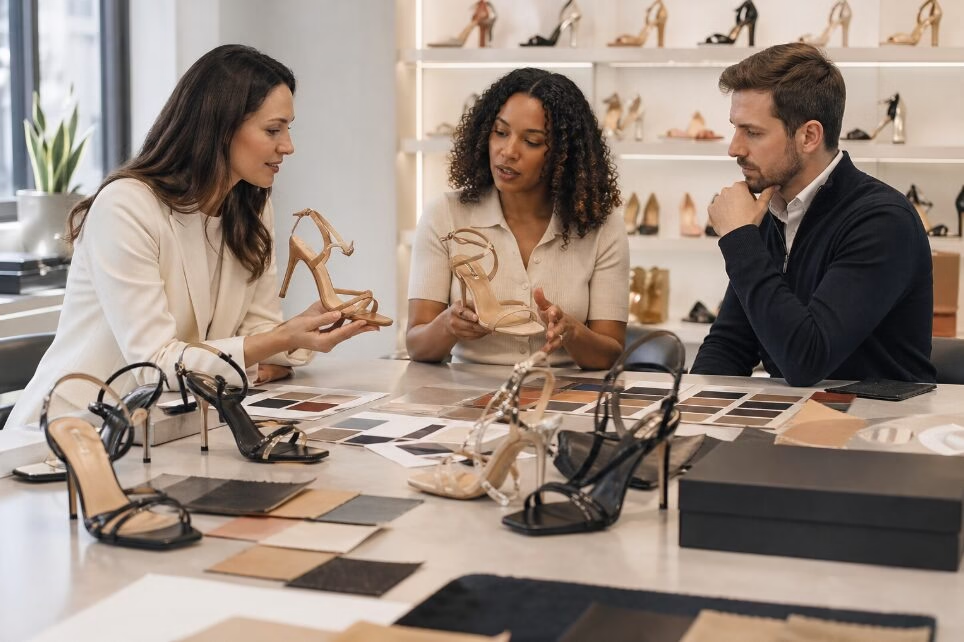
The right buyers are companies that need differentiated products, stronger brand control, and better margin protection. If your business depends on exclusive styles, private label packaging, or reduced price competition, working with a custom sandals manufacturer is usually more strategic than sourcing only standard catalog products.
Yes, brand owners are one of the best fits for private label sandals. They usually need custom uppers, branded insoles, logo details, packaging, and more recognizable styling so their products feel brand-specific rather than interchangeable. For this type of buyer, a supplier that can connect design, materials, and production in one process creates much more value than a trader that only quotes existing styles.
They choose bulk custom sandals because exclusive products are easier to merchandise and less exposed to direct price comparison. Retailers and wholesalers also gain more control over seasonal color stories, repeat-order planning, and customer segmentation. A stronger factory partner helps them build collections that look more intentional and commercially usable.
Yes, ecommerce sellers can start with customized sandals instead of fully new development. In many cases, modifying an existing style through color changes, logo application, insole branding, or packaging updates is enough to test demand quickly and with lower inventory risk.
Buyer Fit Table
| Buyer Type | Best Use Case | Main Goal | Recommended Starting Point |
| Brand | Private label launch | Build identity | Logo, packaging, exclusive colorways |
| Retailer | Seasonal assortment | Reduce direct comparison | Repeatable custom styles |
| Wholesaler | Volume program | Improve differentiation | Scalable bulk runs |
| Ecommerce seller | Market testing | Lower risk | Light customization on existing styles |
A supplier like Sansheng Shoes is relevant to these buyer types because its site presents direct-factory OEM and ODM service, small trial orders from 50 pairs, and end-to-end support from design to shipment. Those are exactly the features many B2B buyers look for at both the early stage and the scaling stage of a custom sandals program.
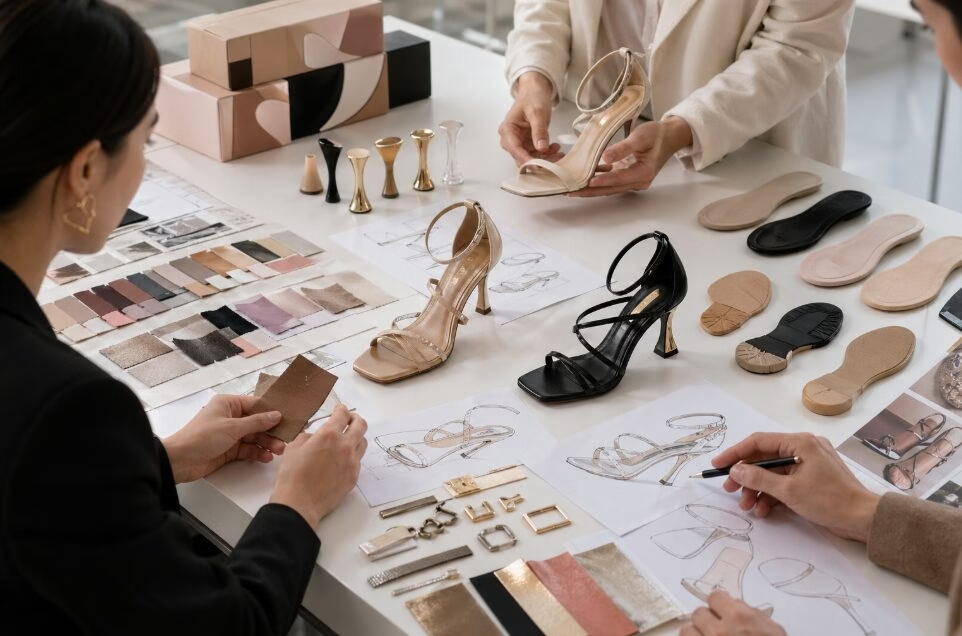
Buyers usually use custom sandals as a broad sourcing term that covers several levels of customization. In real factory communication, the more important issue is not the wording itself, but whether the supplier can support light modification, deeper development, or both.
It usually means an existing style is being modified rather than rebuilt from zero. A buyer may change the upper color, buckle finish, logo method, insole print, or shoe box while keeping the basic outsole and construction unchanged.
It usually means deeper development based on a sketch, reference sample, or tech pack. That can include new patterns, custom trims, outsole adjustments, heel changes, or other structural updates that require more development time.
No, these terms do not always need a strict comparison. In sourcing conversations, they often overlap, so the better approach is to define the actual customization scope, material options, tooling needs, and sample process before discussing price or lead time.
Practical Meaning Table
| Term | Typical Sourcing Meaning | Best For |
| Custom sandals | Broad customization term | General supplier communication |
| Customized sandals | Modified existing styles | Faster and lower-risk projects |
| Custom made sandals | Deeper development work | More original product creation |
This is where supplier flexibility matters. Sansheng Shoes describes personalized customization, OEM and ODM models, ready-to-ship inventory, small trial orders, and full-scale mass production. That suggests a buyer can begin with lighter customization and later move into more developed private label programs.
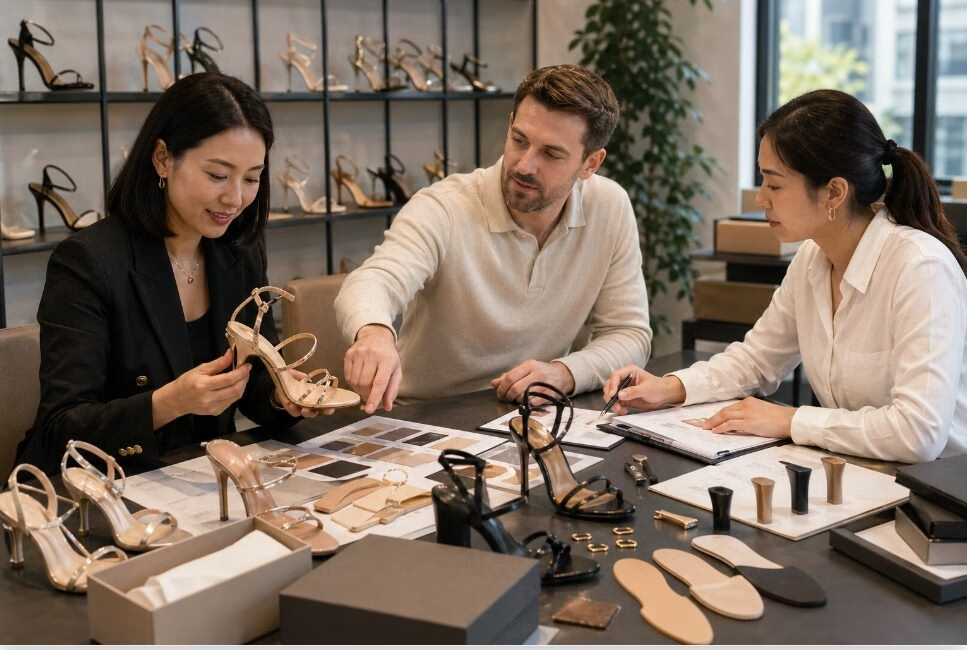
You should confirm MOQ, sample lead time, material options, logo methods, and quality control before choosing a supplier. These five checkpoints directly affect commercial risk, launch timing, product positioning, and the success of future repeat orders.
MOQ is the minimum quantity required for production, and it directly affects your inventory pressure and entry cost. Lower MOQ is especially important for new brands, seasonal tests, and ecommerce sellers validating demand. A supplier that supports smaller trial orders gives buyers more flexibility in early-stage sourcing.
Sample lead time is the real measure of how fast a factory can move from concept to execution. A supplier that replies quickly but samples slowly can still damage your launch calendar. Ask about first samples, revisions, and pre-production confirmation, not just one general timeline.
Material options shape both quality and pricing. Buyers should ask about upper materials, linings, insoles, outsole choices, trims, and color availability. Good suppliers explain not only what is available, but also how those choices affect comfort, durability, and commercial positioning.
Logo methods affect brand visibility and cost. Common options include embossing, debossing, printing, metal plates, outsole logos, and packaging labels. The right method should match your price band and target customer rather than simply add decoration.
Quality control should run through the full process, not only final inspection. Stronger factories check materials, color consistency, fit grading, workmanship, finishing, and packing standards before shipment, which reduces repeat-order risk.
Supplier Evaluation Checklist
| Checkpoint | Why It Matters | Key Question |
| MOQ | Controls risk and inventory | What is the MOQ by style, color, and size range? |
| Sample lead time | Affects launch speed | How many days are needed for each sample stage? |
| Material options | Shapes quality and price | Which materials are standard and which are upgraded? |
| Logo methods | Affects brand image | Which branding options fit this style? |
| Quality control | Protects repeat business | How do you control fit, color, and workmanship? |
Sansheng Shoes presents several relevant strengths in this area, including MOQ from 50 pairs, 100+ new style updates weekly, five quality inspection processes, and direct factory supply without middlemen. Those points align closely with the five checkpoints buyers should review before approving a sampling plan or first order.
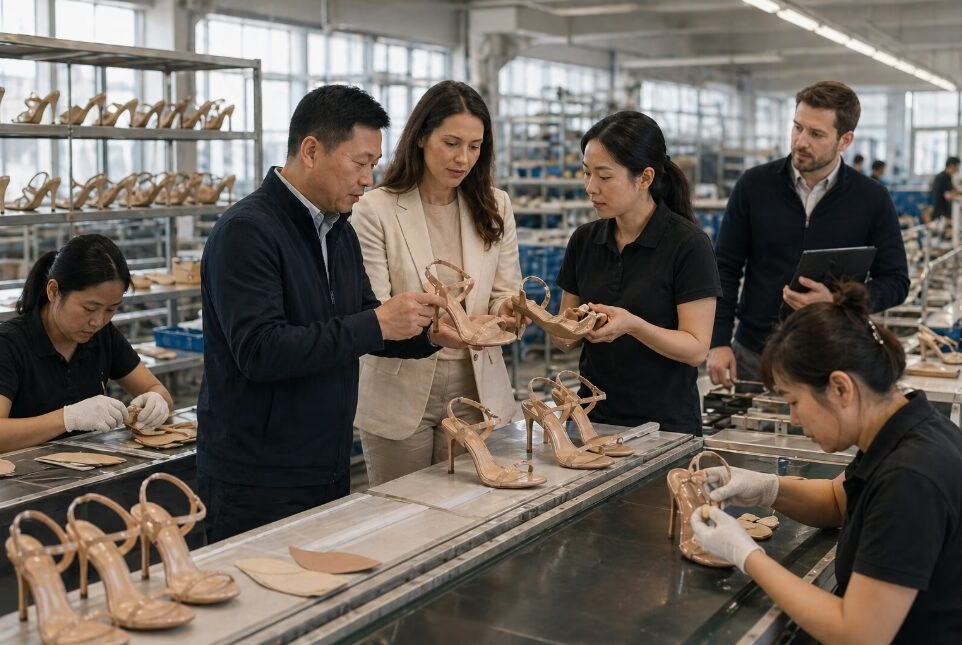
You can judge long-term fit by looking at development ability, sampling efficiency, production stability, and packaging coordination. A factory may look attractive on price, but long-term success depends on whether it can keep quality, communication, and timing consistent over repeated orders.
A good factory should be able to turn reference images, sketches, or commercial targets into workable samples. Strong development ability usually shortens revision cycles and reduces misunderstandings between buyer expectations and actual production output.
A structured supplier gives clear timelines, revision logic, and practical material suggestions. This matters because poor sample management usually becomes a larger problem during bulk production.
Consistency is one of the most important long-term indicators. Repeatable fit grading, reliable color matching, and stable finishing standards matter much more than one successful first sample.
A scalable partner should be able to support branded boxes, carton marks, barcode labels, and different shipping needs without confusion. This is especially important for private label retail, wholesale, and ecommerce fulfillment.
Long-Term Fit Scorecard
| Capability | Weak Sign | Strong Sign |
| Development | Vague answers | Clear suggestions and feasible solutions |
| Sampling | Slow or inconsistent | Fast and structured follow-up |
| Consistency | Unstable fit or colors | Repeatable quality standards |
| Packaging | Limited cooperation | Flexible private label support |
Sansheng Shoes highlights several long-term cooperation signals on its website, including 18 years of B2B experience, 10 production lines, monthly capacity of over 200,000 pairs, sales in 56 countries, and sea and air freight with door-to-door service. The site also states that regular styles can ship within 7 days and that large-volume orders can be delivered in about 7 to 15 days, which are exactly the kinds of operating details a buyer should evaluate when judging long-term factory reliability.
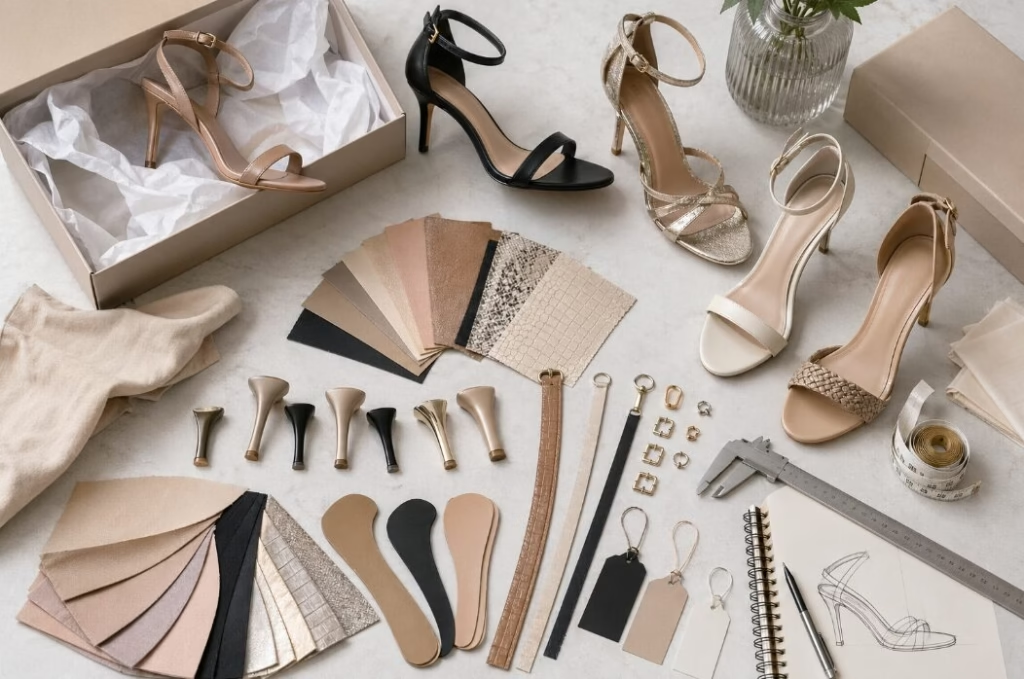
You should ask focused questions about quantity, timing, customization scope, consistency, and responsibility before your first order. Clear questions reduce sourcing risk and reveal whether the supplier is operationally strong or only commercially attractive.
The best supplier questions are the ones that clarify what will be produced, how long it will take, how quality will be controlled, and what happens if approved samples and bulk goods do not match.
This question set matches the kind of structured process shown on the Sansheng Shoes site, which outlines needs communication, mold making, material sourcing, upper assembly, product molding, quality assurance, packaging, and flexible production. That visibility is useful because it helps buyers judge whether a factory has a real operating system behind its quotations.
Yes, custom sandals are suitable for small brands when the supplier supports moderate customization and manageable MOQ. That makes testing easier before moving into larger repeat orders.
Yes, customized sandals are usually faster because they modify existing styles instead of building a product from zero. That often shortens both development and production preparation.
You should choose OEM if you already have a clearer design direction, and ODM if you want to start from supplier-developed styles and adapt them for your market.
The most important factors are clear specifications, workable MOQ, stable samples, transparent communication, and repeatable quality. These usually matter more than the lowest starting quote.
The best custom sandals manufacturer is the one that can support your business beyond the first sample. For buyers evaluating long-term partners, the real priority should be flexible MOQ, efficient development, stable quality control, packaging cooperation, and scalable delivery. Sansheng Shoes naturally illustrates many of these service strengths through its direct-factory model, OEM and ODM support, low-MOQ entry point, frequent design updates, inspection system, and global production and shipping capacity. For a B2B buyer, those are the kinds of supplier advantages that make a custom sandals program easier to launch and more reliable to scale.