
Summary
Vintage high heels can deliver the kind of silhouette, craftsmanship, and character that modern shoes rarely replicate—but they also come with unique risks: sizing quirks, aged materials, and hidden structural issues. This guide walks you through a practical, era-aware checklist so you can buy confidently online or in-store. You’ll learn how to verify “true vintage,” measure your foot correctly, check width, evaluate materials and hardware, and choose styles that fit your wardrobe—whether you’re hunting classic black high heel pumps or sourcing high fashion heels and wholesale high heels for a boutique.
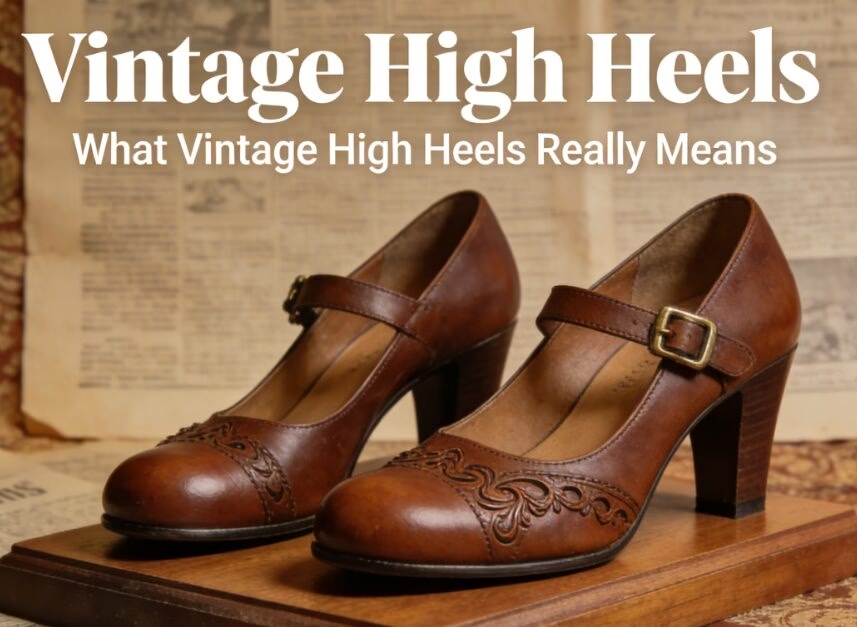
Before you click “buy,” clarify the label. “Vintage” usually refers to an older, original item from a past era (often 20+ years old). “Retro” or high heels retro typically describes a new shoe made today with a vintage-inspired shape—think a 1950s kitten heel silhouette built with modern foam padding. “Secondhand” simply means pre-owned; it could be last season or decades old. This distinction matters for fit, durability, and value. A true vintage pair may have superior leather and finishing, but it may also have adhesives that have aged or materials that no longer flex safely. Retro pairs offer the look with fewer risks, while secondhand modern heels are mostly about condition and price.
Different eras look and feel different on the foot. Knowing the era helps you predict toe box shape, heel pitch, and typical width. • 1950s: kitten heels and delicate pumps with a refined, tapered toe. Elegant but often narrower through the forefoot. • 1970s: platforms and chunky heels. More stable for walking, with bolder uppers and thicker soles. • 1990s–early 2000s: minimalist high fashion heels and sleek pumps—clean lines, sharper toes, and a higher likelihood of early synthetics. When shopping, match the era to your comfort needs: a 1970s platform may be kinder for long wear than a sharp 1950s pump.
Use this quick screen to avoid the most common “arrives and disappoints” outcomes. Start with structure: does the heel look straight and centered, and does the shoe appear symmetrical from left to right? Next, check the upper: look for cracking, peeling, or separation at flex points (especially where the foot bends). Then inspect the outsole and heel tips: worn heel tips are replaceable, but uneven wear can signal alignment issues that affect comfort and stability. Finally, confirm fit data (size and width) and authenticity cues (labels, construction quality, clean finishing). If any single category raises doubts and the seller cannot provide clear measurements or close-up photos, pass—or buy only if you have a realistic repair budget and a return option.
Table 1 — Quick Checklist
| Checkpoint | What to Look For | Red Flags | Buyer Action |
| Overall structure | Heel aligned, shoe stands straight | Wobbling heel, twisted shank | Skip or budget for repair |
| Upper condition | Smooth leather, stable stitching | Cracks, peeling ‘pleather,’ separation | Avoid unless collectible |
| Sole & heel tips | Minimal wear, replaceable tip | Worn-down heel tip, uneven sole | Request repair estimate |
| Insole/lining | Clean, intact padding | Mold smell, sticky lining | Don’t buy / sanitize plan |
| Authenticity cues | Clear branding, quality finish | Misspellings, cheap glue lines | Ask for close-up photos |
| Fit factors | Correct size + width | Seller says ‘runs small’ with no data | Measure & confirm |
Tip: If the seller can’t provide measurements and close-ups, treat it as a high-risk listing.
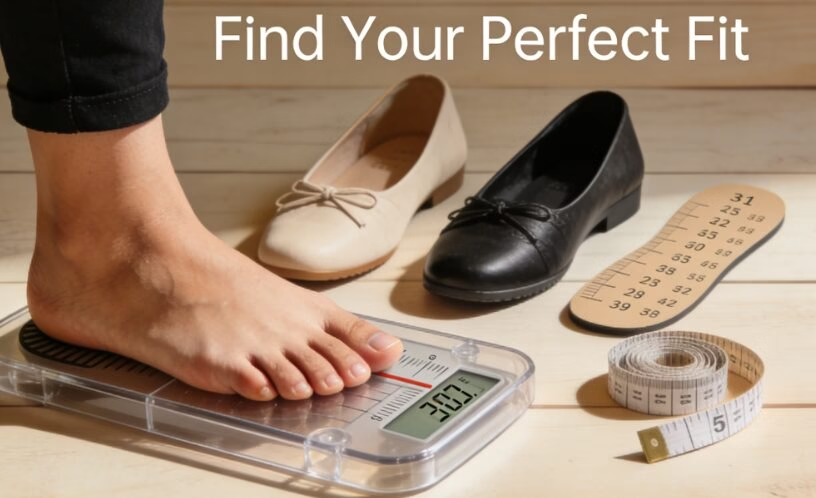
Know Your Foot Size before you shop—especially for vintage, where returns may be limited. Measure both feet at the end of the day when they’re slightly larger. 1) Place paper on a hard floor and stand with full weight on the foot. 2) Trace the outline, then measure heel-to-longest-toe length in millimeters. 3) Repeat for the other foot and use the longer measurement. Ask sellers for the insole length (not just the labeled size). An insole length close to your foot length plus a small allowance is a better predictor of fit than a size tag alone.
Vintage sizing can run smaller, narrower, or simply inconsistent. Older lasts were often slimmer, and some brands used different grading systems. A labeled “US 7” from one decade can feel like a modern 6.5 or a tight 7. If the shoe is leather, it may stretch slightly in width but rarely in length. If it’s an older synthetic, it may not stretch at all—and could crack if forced. Treat every pair as a measurement problem, not a label problem.
If you can’t try them on, replace guesswork with questions: • What is the exact insole length and ball-of-foot width (in mm or cm)? • What is the heel height measured from the back center? • Is there slipping at the heel or pressure at the toe box? • Any repairs, replacements, or soft spots in the sole? Good sellers will answer with measurements and clear photos. If answers are vague (“runs small”) without numbers, that’s a risk signal.
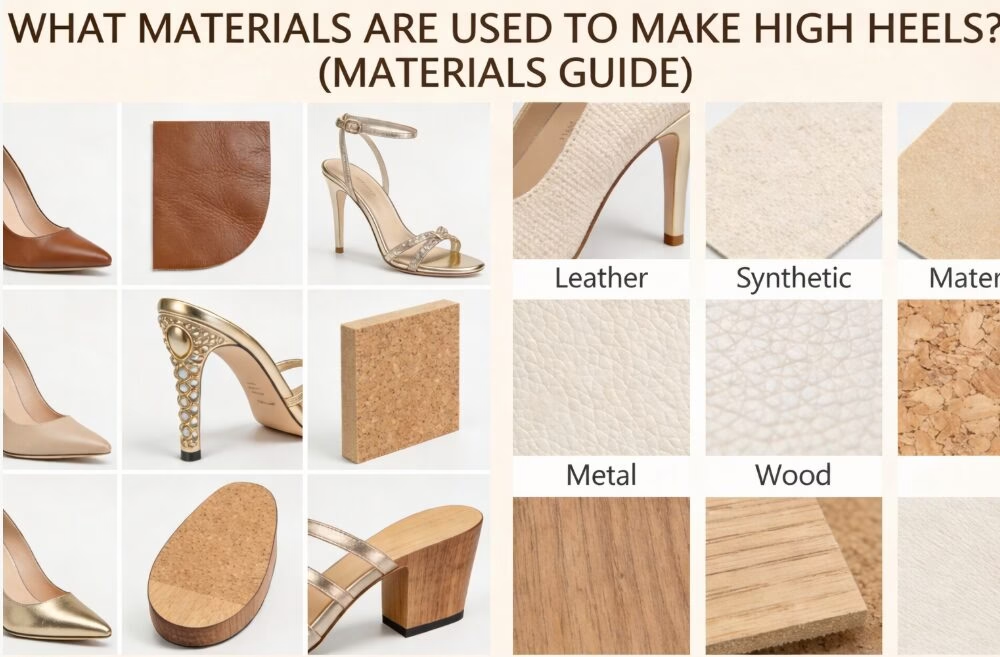
What materials are used to make high heels? In vintage styles you’ll most often see leather (smooth, pebble, or full-grain), suede, and patent leather. Special-occasion pairs may use satin or silk blends. You may also encounter early synthetics (PVC or coated fabrics) that look fine in photos but degrade over time. For hardware, expect metal buckles, eyelets, and decorative elements; quality hardware should feel solid, not flimsy or sharp at edges.
Materials tell you whether a shoe is “worn” or “breaking down.” Leather can show gentle creasing and still be healthy; deep cracks, flaking finish, or stiffness at the vamp are warning signs. Patent leather can develop micro-cracks at flex points—small cracks usually grow. Suede can be revived with brushing, but bald spots are harder to hide. Satin can snag and fray; decide whether you’re buying it as a collectible or a wearable. When in doubt, zoom in on high-stress zones: toe bends, strap holes, and the heel seat.
Hardware and construction affect safety. Check buckles and zippers for corrosion, and ensure rivets or eyelets are tight. In high heels, the heel attachment and internal shank are critical. Stitching generally ages better than heavy glue-only construction, but many heels use adhesives in layers; old glue can fail after long storage. If you see gaps where the outsole meets the upper, or the heel base shows separation lines, assume you’ll need a cobbler. For buyers building a vintage-inspired line, these are the same QC points factories use when sampling high fashion heels.

To verify “true vintage,” start with the inside label and any stamps under the sole or in the arch. Look for consistent brand spelling, clean imprinting, and realistic country-of-origin markings. Ask for close-up photos of the logo, size stamp, and any serial numbers. Authentic pairs typically show consistent font and placement. Be cautious with “no label” claims unless the construction quality clearly supports the story.
Even without a famous label, craftsmanship speaks. Look for symmetrical toe shapes, clean edge finishing, straight stitching lines, and an even heel pitch. The shoe should appear balanced when placed on a flat surface; if the heel looks off-center, it may feel unstable. High-quality vintage heels often have better lining and smoother seams that reduce friction compared with low-end mass production.
Some listings use “vintage” to mean “vintage-inspired.” That’s not automatically bad, but the price should match. Real vintage usually shows older manufacturing cues and natural material aging. Modern retro shoes may have contemporary foam insoles, updated rubber outsoles, and standardized size labels. If you want daily comfort, a well-made high heels retro option can be smarter than fragile originals—just be clear about what you’re paying for.

If you’re new to vintage, start with classic pumps—especially black high heel pumps. They pair with jeans, tailoring, and eveningwear, and they’re easier to evaluate for condition because the design is simple. Choose a toe shape you already know you can wear (almond or slightly rounded for comfort). A modest heel height improves stability and reduces stress on older materials.
Heel height should match where you’ll actually wear the shoes. As a rule of thumb: • 2–3 inch: daily wear, commutes, and long events. • 3–4 inch: statement looks, shorter wear windows. • Platforms: added height with more surface area and stability, often a good vintage pick. Remember that older heels may have less cushioning. If you love the look but need comfort, consider adding removable pads or choosing a retro-inspired pair with modern support.
If you love the silhouette but need predictable fit and materials, vintage-inspired options can be the best of both worlds. Look for modern builds that borrow classic lines while upgrading comfort: padded insoles, grippy outsoles, and reinforced heel bases. This is also where trend-led items like thigh high heels often live—usually not “true vintage,” but strongly vintage-inspired in shape, hardware, and finish. This is also where “high fashion heels” trends show up first—brands and OEM/ODM makers translate archival shapes into new runs. If you’re sourcing for a shop, it’s worth comparing true vintage stock versus new retro lines for return rates and customer satisfaction.

Online marketplaces offer volume and deals, but quality varies. Prioritize listings with multiple angles, close-ups of wear points, and exact measurements. Check seller reviews and return policies. Curated vintage shops cost more, but they often pre-screen condition and can provide sizing guidance. For first-time buyers, curated sources reduce risk—especially for delicate materials like satin or older patent.
Auctions and estate sales can yield rare finds, but they come with “as-is” risk. Inspect in person if possible: flex the sole gently, check odor, and look for separation. If bidding online, budget for refurbishment. A bargain price can disappear once you add resoling, heel tip replacement, and cleaning.
If you’re buying for resale, styling, or content production, treat inventory like a system. For wholesale high heels or bulk vintage lots, require a clear grading standard (A/B/C), size-run breakdown, and consistent photo documentation. Ask whether heel tips and minor repairs have been addressed. Consider a pilot order first to validate condition accuracy before scaling. For boutiques, mixing true vintage hero pairs with reliable vintage-inspired lines can reduce returns while keeping the “one-of-a-kind” appeal.